
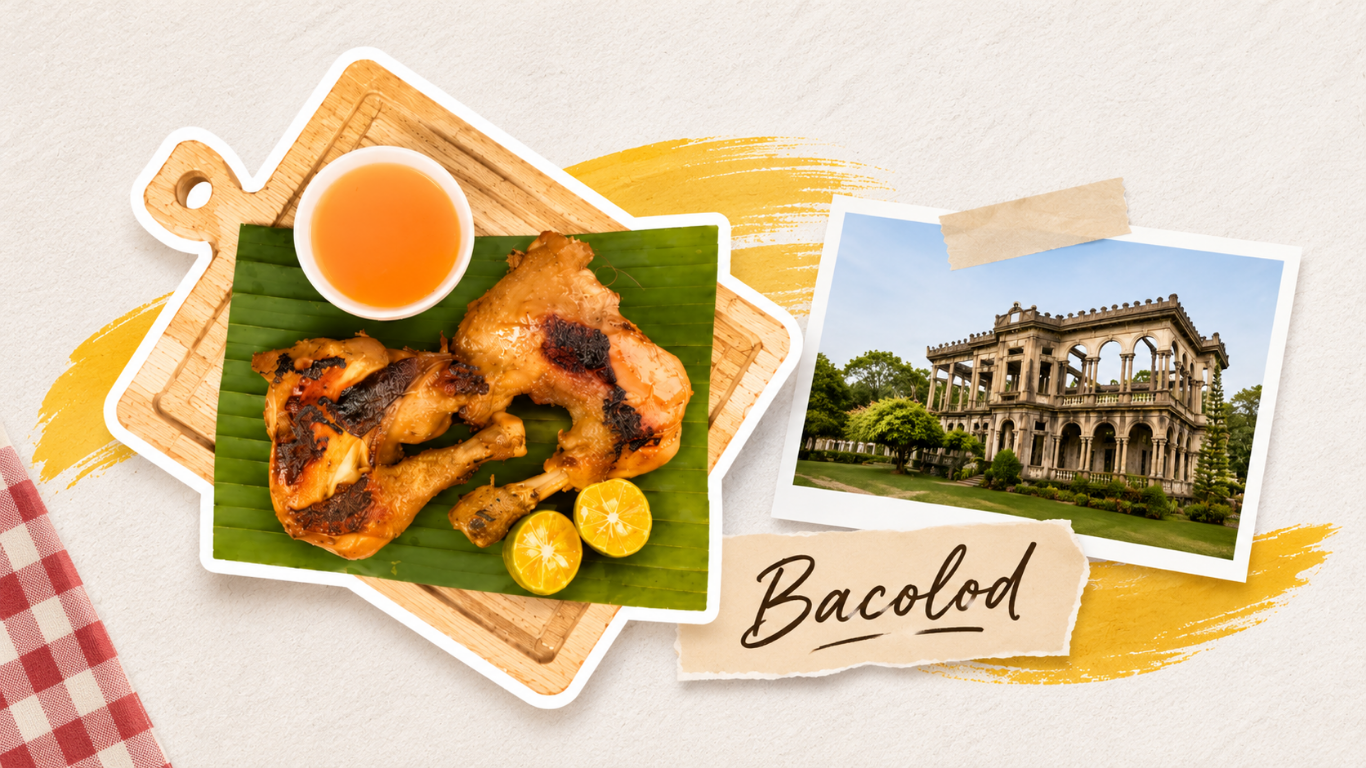
When I think of Bacolod, the first thing that comes to my mind is chicken inasal. It’s almost impossible to think of the city without thinking about that smoky, grilled chicken, paired with rice and a good serving of sinamak.
But looking at Bacolod’s food scene today, there’s clearly more to the city than its famous inasal. In recent years, Bacolod and the wider Negros region have been getting more attention for their local food culture, sustainable practices, and the communities behind the food.
One of the biggest developments is Bacolod’s growing role in the Slow Food movement. The city is on its way to becoming the first Slow Food International Hub in Asia and the Pacific, with a five-year plan focused on food education, building local and regional networks, and promoting sustainable food systems.
A Food Culture Rooted in Negros
Bacolod’s food culture is closely connected to the people and communities behind it. Across the city and the wider Negros region, local farmers, producers, cooks, and food communities continue to preserve traditional ingredients and food practices.
This is where the Slow Food movement comes in. It is a global movement that promotes good, clean, and fair food while supporting local food traditions, biodiversity, and more sustainable food systems. In Bacolod, it puts more attention on where food comes from, how it is produced, and how local food traditions can be preserved and passed on.
The movement also gives travelers another way to experience Negros. Instead of simply looking for where to eat, there is an opportunity to learn about the ingredients, producers, communities, and traditions behind what ends up on the plate.
Why Bacolod’s Food Scene Is Worth Watching
Bacolod’s role in the Slow Food movement became more visible after it hosted the first Terra Madre Asia & Pacific in November 2025. The event brought together food communities from across the region and highlighted Negros’ biodiversity, food heritage, farmers, fishers, and local producers.
But the bigger story isn’t the event itself. It’s what the spotlight means for Bacolod moving forward.
The city now has a stronger platform to connect its local food communities with a wider Asia-Pacific network, while continuing to develop food education, sustainable gastronomy, and Slow Food programs in Negros. Slow Food has described Bacolod as being on its way to becoming the first Slow Food Hub in Asia and the Pacific.
For me, that changes the way I look at Bacolod as a food destination.
Chicken inasal may still be what first comes to mind when I think of the city—or at least for me—but learning more about its food culture made me realize there’s so much more to explore.
And honestly, that makes me even more curious about what else Negros has on the table.