
Urban legends arise from eerie stories that often get passed on between friends, classmates, colleagues, and family, spreading like wildfire and turning idle bits of chit-chat into shared myths, and commonly travelled streets and locales into sites of fear and mysticism.
The Philippines is no stranger to these stories. Blending deeply-rooted animism from Indigenous traditions with religious superstitions and modern anxieties, Filipinos are all too familiar with urban legends like schools that were built on cemeteries or hospitals, ghosts in old war tunnels, and malevolent beings who chant with you as you pray for dear life.
This Undas, we’re counting down some of these unnerving stories that continue to persist as Filipinos pass them forward. Here are High Five urban horror legends for the spooky season.
The White Lady of Balete Drive
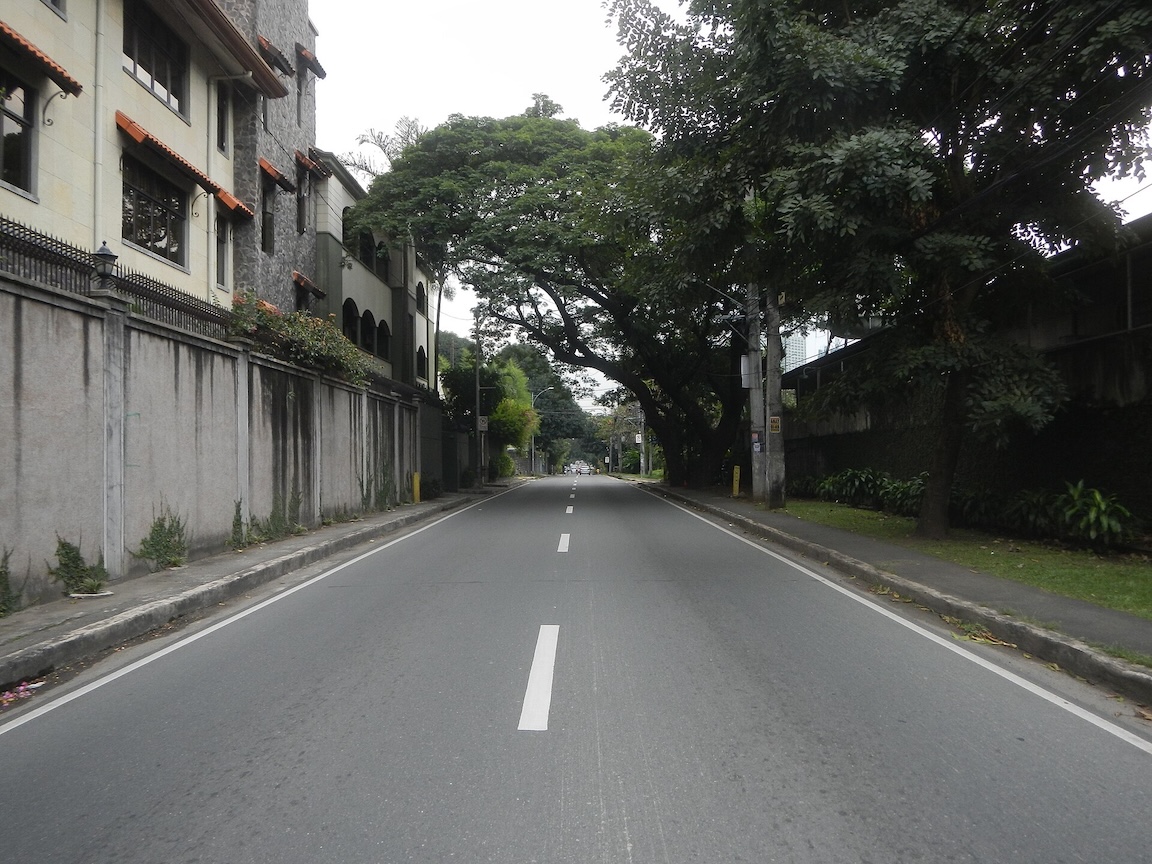
Photo from Wikimedia Commons
Under the shade of the balete trees bodes one of the most popular urban legends in the Philippines. In the middle of the night, under the quiet dim of Balete Drive that connects the Eulogio Rodriguez Sr. Avenue and Nicanor Domingo Street in Quezon City, it is rumored that a lady dressed in white haunts the thoroughfare, preying victim on innocent taxi drivers and any other passersby that encounter the apparition.
It is said that the woman clad in white is a spirit haunting the site of her demise, and now seeks to take revenge on anyone who dares pass through Balete Drive. Some say that the woman was run over by a taxi driver and subsequently buried under a balete tree, while others say that she was a victim of sexual assault or domestic abuse before her untimely death, and now roams the streets seeking for help.
Over the years, some have tried to demythologize the urban legend. In one story, it is said that the “White Lady” was simply invented by some reporters in the ‘90s, while another story claims that the story was derived from an accident during a joyride that turned fatal. Regardless of its true origins, the urban legend continues to live on and spook anyone that dares pass through Balete Drive late at night.
The Haunted Diplomat Hotel
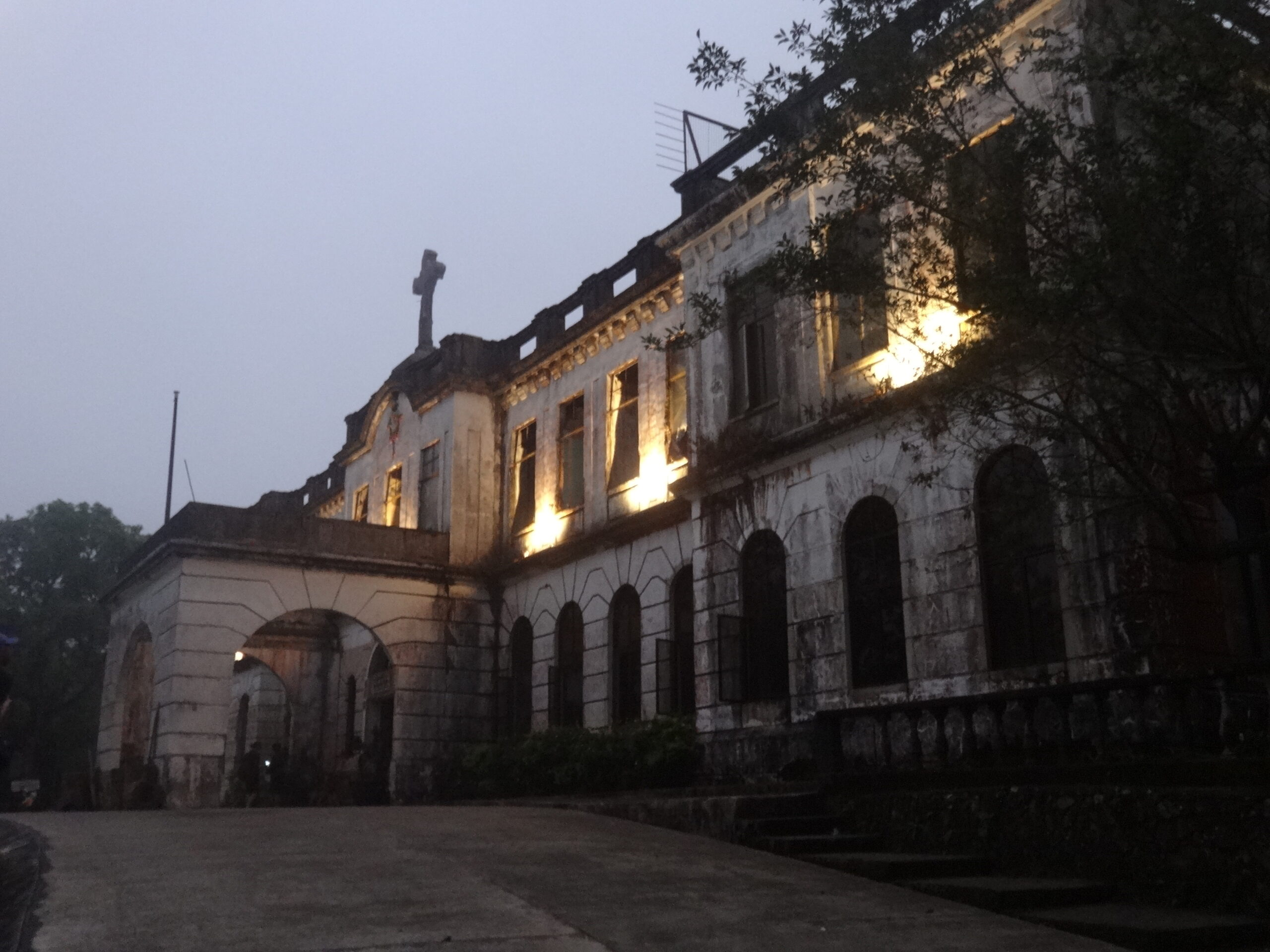
Photo from Wikimedia Commons
On top of Baguio’s Dominican Hill lies the former Diplomat Hotel—one of the most recognized haunted places in the Philippines.
In recent times, there have been multiple reports of various apparitions sighted in the premises of the abandoned structure, such as the visages of nuns and hooded friars roaming the edifice, sights of children near the alleged “bloody fountain” of the building, the cry of infants, and Japanese soldiers during the Japanese Occupation.
The building was originally constructed from 1913 to 1915 as a Dominican vacation house for friars and nuns. But during World War II, the place became a refuge for anyone seeking to evade the Japanese. But when the place was invaded by the Japanese forces, they then turned it into the last bastion for the Japanese Imperial Army. And inside, horrible acts of torture, rape, and executions were done by the foreign soldiers to the refugees, comfort women, priests, and nuns that resided in the building.
In 1973, the structure was then turned into a hotel by Antonio Agpawa, a faith healer and an entrepreneur from Baguio. But after his passing, the hotel ceased operations. Since then, the place has been declared as a National Historical Site by the government. It continues to regularly garner tourists who wish to see such a piece of history—or the restless spirits of the countless victims of the unspeakable horrors of the past, unable to rest in peace.
Teniente Gimo, The Aswang of Dueñas, Iloilo
Still from ABS-CBN News, Edited by SEA Wave
In IloIlo, a quiet barrio in Dueñas was once led by a cabeza de barangay named Teniente Gimo, who was said to have secretly been part of a clan of aswangs in the barrio.
The famous iteration of the story mentions Teniente Gimo’s daughter coming home with her friend who initially planned on staying the night. But when her daughter’s friend woke up in the midnight, she saw a group of people, including the tentiente, encircling a boiling cauldron and talking about eating a guest that bore a certain accessory. Deducing that it was her that was being mentioned, she made the sleeping daughter of the teniente wear her accessory and then faked being asleep after. Then, because of the switched accessory, Gimo’s people mistakenly took the daughter, while the friend made her escape afterwards. The daughter was then mistakenly killed, and subsequently the tentiente was paraded as an aswang to the whole town.
Other reports suggest that Teniente Gimo originally bore different names and stories. One story says that he helped resist the American occupation and used his daughter as bait in murdering and eventually consuming American teachers. Other stories say that he lived as a wealthy landowner and was mistakenly thought to be an aswang after a child was found dead with their flesh scattered throughout his property.
While he has lived many lives in the imagination of locals, the mystery behind Teniente Gimo remains intact, inspiring fear and wonder to this day.
Maria Labo, The OFW-turned-Aswang of Visayas

Image from Viva Films
Somewhere in Visayas, said to either originate from Iloilo or Capiz, a woman decided to become an OFW for the benefit of her family. Legend says that while working abroad, she contracted an unknown disease that turned her into an aswang. So when she returned home, her growing hunger for human flesh drove her to kill her two sons and cook them. Her husband, shocked upon discovering the scene, responded by hacking a bolo to her face that left a large scar on her features. This gave her the name Maria Labo, with “labo” being an Ilongo term for slashing with a bolo knife. The woman was able to escape from her husband’s anger, and has since roamed around the country in search of her next prey.
Some remark the story as a commentary on the plights of OFWs who decide to risk working in another country for the sake of their loved ones. Others interpret Maria Labo’s story as an analogy towards the struggles of motherhood, seeing it as an act of liberating oneself from patriarchal oppression. Regardless, Maria Labo’s story showcases how urban legends can cast a light on societal issues that continue to persist today.
The Ghastly Maligaya Taxi 416 of Davao
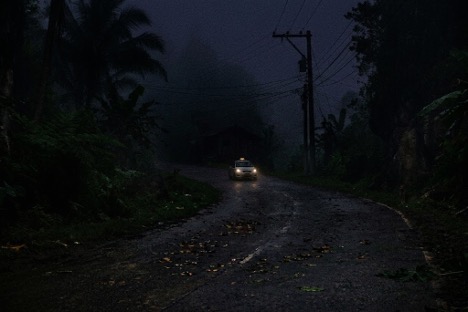
Image from SEA Wave
It is said that a ghostly taxi driver roams the streets of Davao City in search of their next passenger.
According to legends, during the dead of night, a woman hailed a taxi for a ride home. Unbeknownst to her, she would soon discover something more ghastly waiting for her on this trip. During the ride, shivers suddenly crept throughout her body, but she simply dismissed it as an involuntary reaction to the cold embrace of the night. The driver was also eerily silent throughout the whole ride, despite the woman’s attempt at conversation.
As she reached her destination, the driver’s head slowly twists towards her. There, she beholds a horrifying sight: blood trickling down from the dome of the driver’s deformed head. In other iterations, the woman glances at the driver after looking through her wallet for the fare money, only to see the driver now suddenly missing their head. The woman, in fright, hurriedly makes her way out of the vehicle. But as she turns around to see the taxi and its frightening driver, it is now nowhere to be seen.
It is said that the driver once chauffeured a taxi numbered 416 under the Maligaya Taxi Company, which was involved in a crash that caused his death. Since then, the restless spirit of the taxi driver haunts the streets of Davao alongside his trusty steed. When asked about the supposed ghost story, the Maligaya Taxi Company denied the existence of such a driver and a taxi bearing the number 416.
Despite the questionable veracity of these stories, these urban legends are shared through generations as explanations for the unexplainable, or as entertaining tales of the unknown. Others are passed down as rumors that mix fact and fiction and end up with questionable veracity. At the end of the day, the stories remain and are passed along to enrich the tapestry of Filipino urban legends.
Which Filipino urban legend is your favorite? Tell us in the comments below!