

Despite ongoing cost-of-living challenges and inflationary pressures, the Philippines emerges as one of the regional leaders in salary optimism. According to the latest 2026 Salary Pulse Report released by Jobstreet by SEEK, the Philippines ranks second in the Asia-Pacific (APAC) region for pay satisfaction, with 80% of Filipino workers feeling fairly or well paid; just behind Indonesia’s 81%.
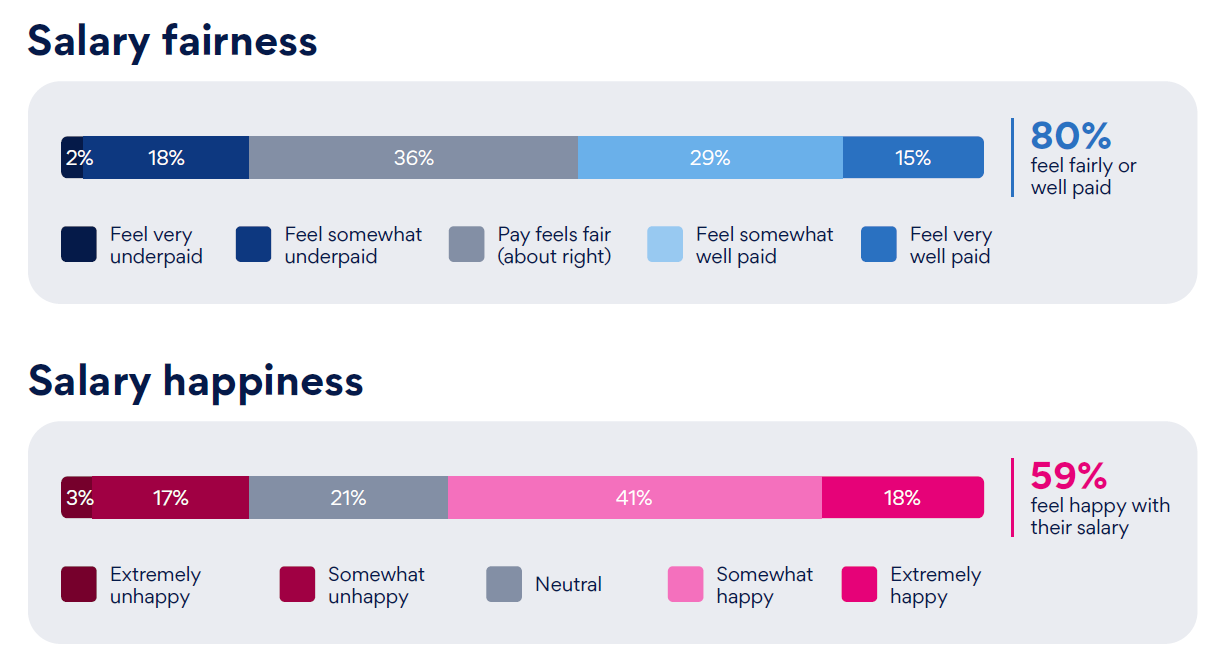
However, the report reveals a critical primary insight for today’s employment landscape: getting fairly paid no longer equals workplace contentment, as only 59% report being happy with their salary, highlighting a disconnect between what they consider fair and what they’d like to earn. In parallel, 45% of respondents say that their earnings still fall below their actual cost-of-living needs.
The Salary Pulse Report was conducted in February 2026, gathering over a thousand employed respondents in the Philippines. Jobstreet by SEEK, through this report, seeks to focus on attitudes and experiences around pay, including how fairly people feel paid, how happy they are with their salary, and how they approach pay conversations.
On salary fairness and work happiness
The 2026 Salary Pulse Report uncovers a notable disconnect between perceived market fairness and actual salary happiness. Among employees who view their pay as “fair (about right),” only 44% are actually satisfied with that level of remuneration, leaving 56% unsatisfied.
This indicates that workers evaluate salary not merely against industry benchmarks, but against their workload, how well they feel rewarded, and how it sustains their lifestyle. Employees’ expectations, as the report suggests, are likewise shaped by how strongly they believe their contribution is valued, and by how well their salary supports what matters to them outside of work.
Salary happiness has also been the driving motivation for Filipinos to stay in their jobs. When workers in the Philippines are happy with their pay, they’re over 2.2x more likely to feel motivated and willing to put in extra effort at work. Conversely, unhappy workers are 2.9x more likely to actively look for a new job.
The Salary Pulse Report also finds that many workers in the Philippines are willing to make compromises, but highly value positive work culture. About 28% of employees stated they would consider relocating to another city or country for a 10% raise. Yet, the same workers are far less likely to sacrifice a positive workplace environment in exchange for a toxic culture for a 10% pay increase.
“The gap between fair pay and salary satisfaction shows that compensation is only one part of the employee experience. Employers need to look beyond salary benchmarks and pair competitive pay with meaningful recognition, clear career pathways, and open conversations about growth to build engaged, future-ready teams,” said Dannah Majarocon, Managing Director of Jobstreet by SEEK in the Philippines.
Pay satisfaction across generations and industries
Generational priorities further shape compensation sentiment across the country. Millennials feel the most financially squeezed, with around half (54%) who are happy with their pay stating their salary falls below their standard of living needs, resulting in a lower salary happiness score (54%) compared to Gen Z (61%) and Gen X (60%).
While millennials are hesitant to compromise on the workplace environment, the report reveals they are the most open to pursuing side hustles to bridge their financial gap. In contrast, Gen Z workers (83%) are open to making trade-offs such as accepting a lower job title or less meaningful work for a 10% raise.
Across industries, Technology (54%) and Construction (50%) lead the market in workers who feel well paid, recording the highest overall salary happiness. Stronger wage growth drives this sentiment, with nearly half of workers in these sectors receiving raises in the last 12 months. Conversely, Industrial sector workers report the lowest pay satisfaction, with 58% noting their earnings fall below cost-of-living requirements.
The findings from the 2026 Salary Pulse Report present a strategic opportunity for Philippine business leaders and policymakers to modernize compensation models and performance management practices. By bridging the gap between pay fairness and meaningful reward, organizations can foster higher employee engagement, lower turnover risks, and build a resilient, future-ready workforce.
To learn more about the report and access career tools, visit https://www.jobstreet.com.ph/.