
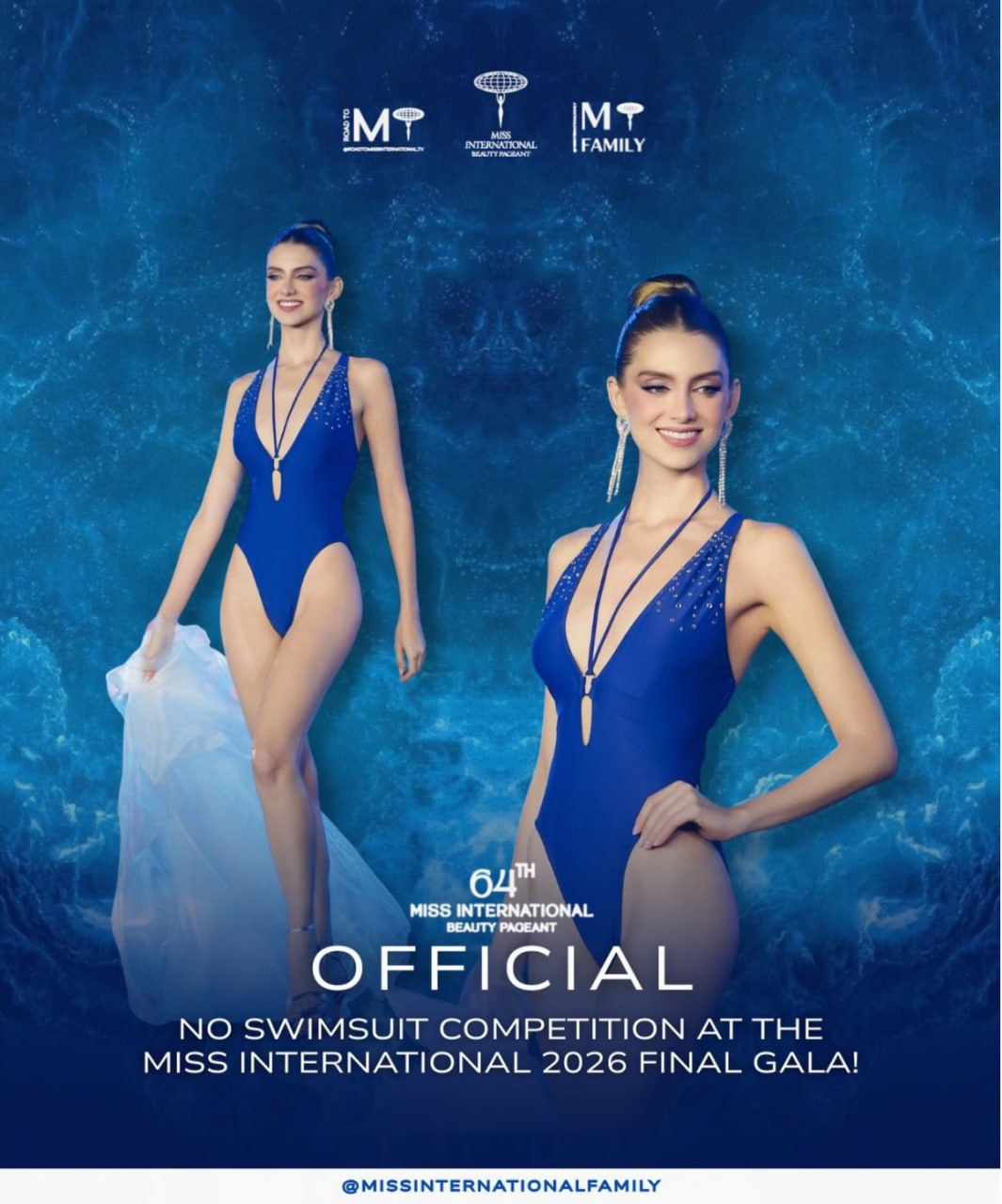
For decades, the swimsuit competition has been one of the most recognizable parts of beauty pageants, featuring beauty queens making their iconic walks and poses while wearing flattering swimwear. That’s why the announcement that Miss International will remove the swimsuit segment from its grand finale stage beginning in 2026 has become one of the biggest talking points in the pageant world.
In its official statement, the Miss International Organization emphasized that beauty pageants are no longer competitions based solely on physical appearance. Instead, it reaffirmed its commitment to its “Beauty with Heart” philosophy, placing greater importance on character, intelligence, social contribution, and international understanding. While swimsuit evaluations may still form part of the candidates’ overall assessment during preliminary activities, the segment itself will no longer be showcased during the televised finals.
For Filipinos, pageantry is more than just a hobby or a yearly spectacle. It is deeply woven into the country’s culture. From barangay fiestas to international stages, generations of Filipinos have passionately followed the journeys of their representatives. With reigning Miss International Philippines Katrina Anne Johnson set to carry the country’s hopes under this evolving landscape, the change naturally sparks conversations among fans and pageant observers alike.
Supporters of the move view it as a reflection of how pageantry continues to evolve. They argue that modern competitions should prioritize substance and provide women with platforms to showcase their advocacies, intellect, and personalities rather than relying on traditional segments. In an era where conversations around empowerment and representation continue to develop, many believe pageants must adapt alongside society.
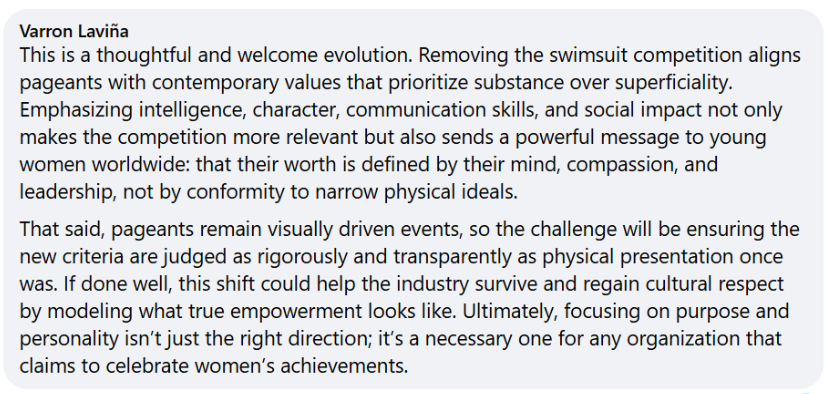 In a comment on Missology’s Facebook page, Varron Laviña called the change a “thoughtful and welcome evolution,” saying it places greater emphasis on intelligence, character, and social impact.
At the same time, some pageant enthusiasts argue that the swimsuit competition has never been solely about physical appearance. For them, it represents confidence, discipline, and physical fitness. Its absence from the grand finale stage, they say, marks a significant departure from a tradition that has been part of pageantry for generations.
 Emmanuel Miguel Miranda via comment on Missology Facebook page, June 2026.
Whether one agrees with the decision or not, one thing is certain: pageantry is changing. Recent years have already seen major competitions embrace inclusivity, expand age requirements, and redefine what beauty means in a modern world. Miss International’s latest move could influence how other pageants rethink their own formats in the years to come.
As pageantry continues to evolve, perhaps the bigger question is no longer whether traditions should remain unchanged, but how competitions can continue celebrating beauty while staying relevant to the values of a new generation.
And in a country as passionate about pageants as the Philippines, that conversation is only just beginning.